Beaumaris is a beautiful town as can be observed via a stroll amongst its quaint cottages, quality shops, varied cafes and high class restaurants. Strolling along its seafront whilst taking in the pier and the magnificent views over the Menai Strait and Snowdonia reinforces its majesty. A visit to Beaumaris is a delight whatever the season.
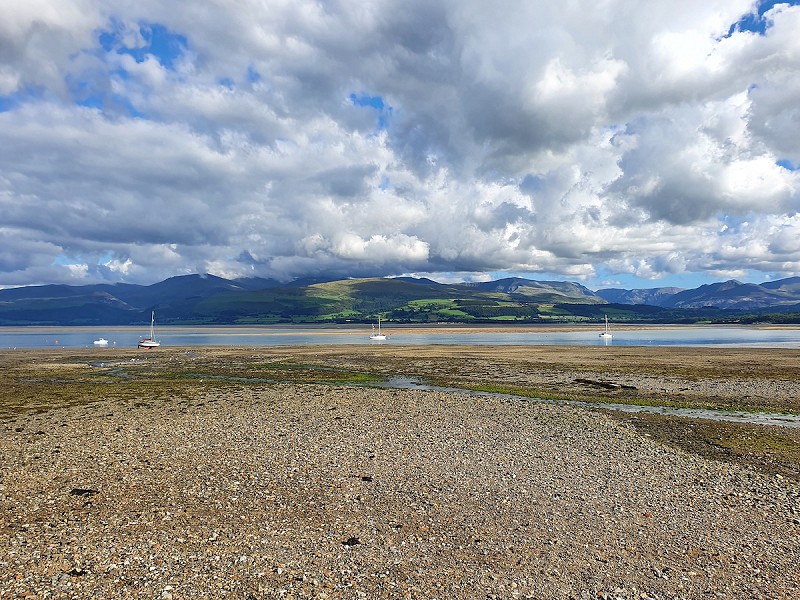
The Menai Straits
The following provides a short walk of approx. 2 km around some of the historical places in the town for you to explore and investigate further. Some of the footpaths are quite narrow so please take care.
Bulkeley Estate Gateways
From Ty Coed turn right down the hill. The first road on the right hand side is Stanley Street. Two long straight terraces of estate workers houses facing one another across a wide street were built for workers of the Bulkeley estate in the 18th century. Built of brick, modelled on a French tradition, each house consisted of 2 storeys, and each pair of houses was entered via a shared covered passage with an outer door. At the far end of street the monumental gateway in brick & stone topped by stone urns once led to/from wooded parkland. At the opposite end over Wexham Street is a lodge and painted iron gates leading into the parkland of the Baron Hill estate of the Bulkeley family.
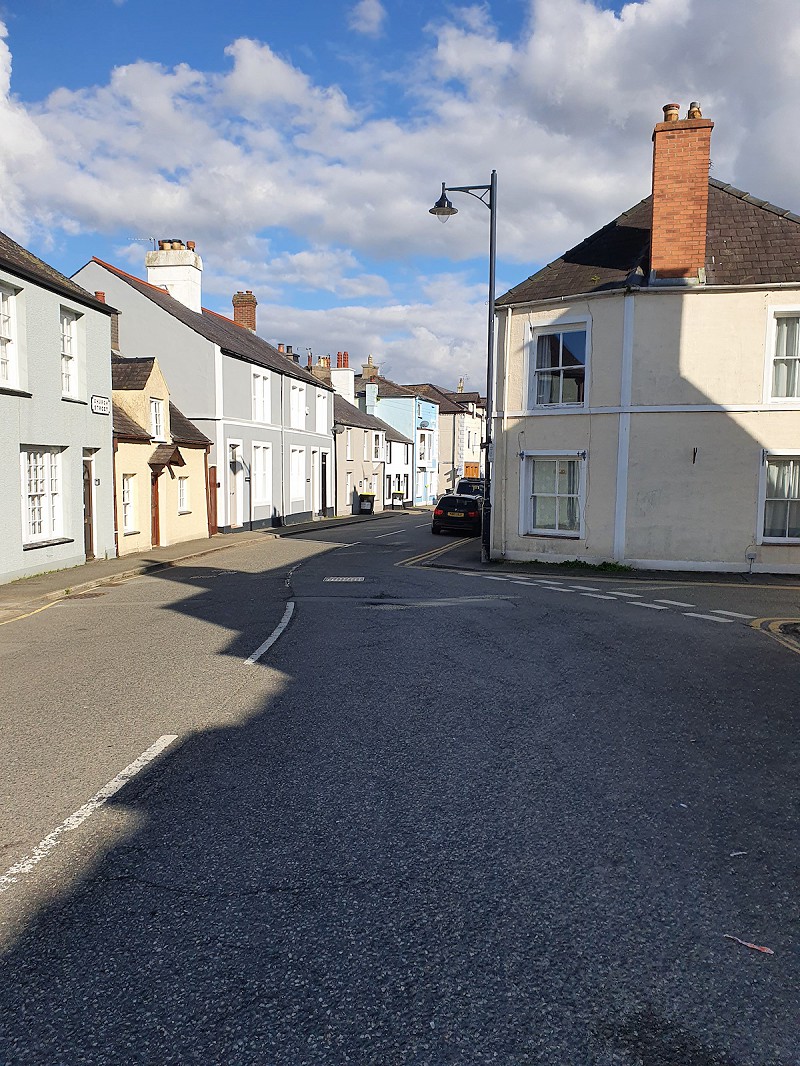
Church Street, Beaumaris
Carry on downhill along Wexham Street, which continues on to Church Street. Turn left onto Rating Row. Carry along this road and to the Lady Queen of Martyrs church on the left hand side. This catholic church was built c1910. Follow the road to the left to bring you to the leisure centre and David Hughes community centre. The Grade II Listed David Hughes Community Centre was founded as a grammar school in 1603 by David Hughes. The school closed in 1962. It was much rebuilt and extended in 1926.
Beaumaris Castle
Following the road past the small car park and round to the right you will find the entrance to Beaumaris Castle. The castle is famous as the greatest castle never built. It was the last of the royal strongholds created by Edward I in Wales.
Here Edward and his architect James of St George took full advantage of a blank canvas. By now they’d already constructed the great castles of Conwy, Caernarfon and Harlech. This was to be their crowning glory, the castle to end all castles.
But lack of money and trouble brewing in Scotland meant building work had petered out by the 1320s. So the distinctive squat shape of Beaumaris tells of a dream that never quite came true. Still it takes its rightful place on the global stage as part of the Castles and Town Walls of Edward I World Heritage Site.
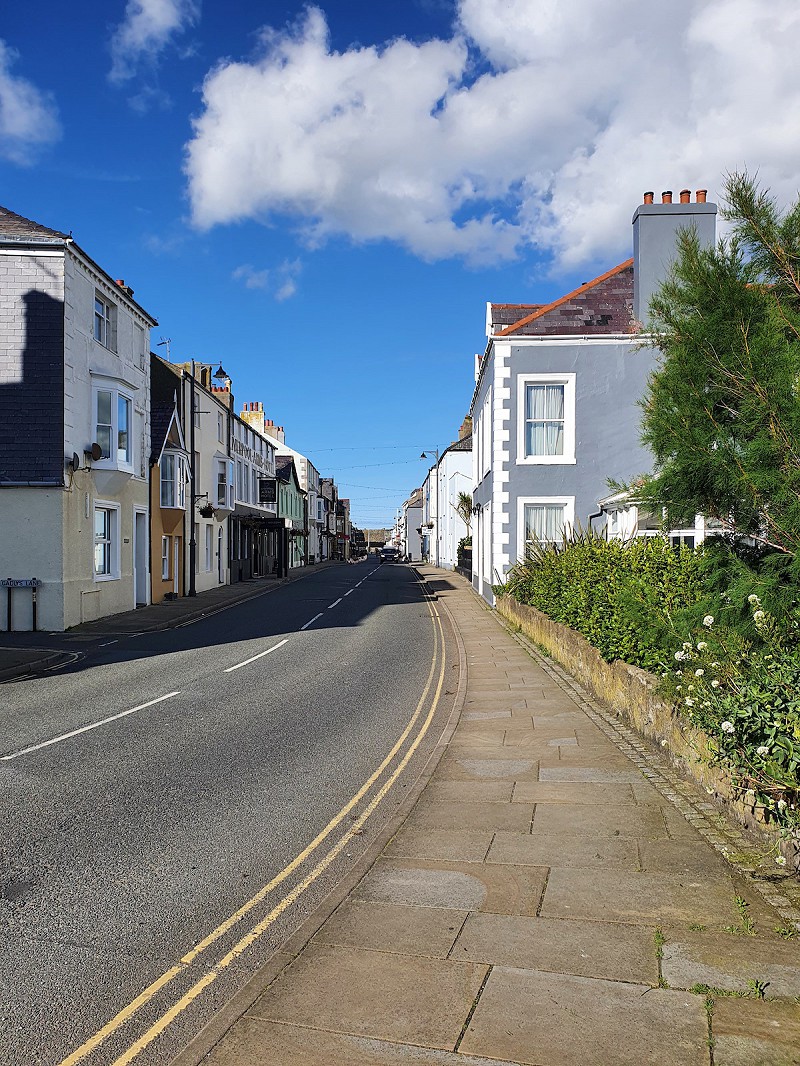
Castle Street, Beaumaris
Beaumaris Courthouse
At the end of the road, cross over Castle Street to the Beaumaris Courthouse. It is one of the oldest courthouses in Britain. The courthouse is over 400 years old. Although alterations were made in the 19th century, its original character remains the same. Throughout the centuries the courthouse has witnessed various cases from petty misdemeanours to murder.
Queen Victoria visits Beaumaris
Turn right away from the courthouse along Castle street, passing the 15th century Grade II listed Bull and Townhouse on the right hand side, and the Bulkeley Hotel on the left hand side. The Bulkeley has an interesting history and connection to Queen Victoria.
Beaumaris Pier
Continue along Castle Street to the arch on the left (opposite Church Street), pass through the arch with the Bulkeley Hotel on your left to come out at the pier. The pier was designed by Frederick Foster and opened in 1846. It was originally constructed of wooden piles and iron girders but was rebuilt in 1872 after sustaining storm damage. A pavilion was built at the end of the 19th century and the pier was served by the steamers of the Liverpool & North Wales Steamship Co. for many years. Many further repairs and changes have been made to the pier over the years.
Anglesey Eisteddfod Stone Circle
Turn left in front of the Bulkeley Hotel towards The Green. You will find a modern stone circle on the waterfront. The circle was erected in 1996, when it was used to celebrate the Anglesey Eisteddfod.
Head back through the arch and turn left on to Castle Street again. Carry along the street passing the recently renovated Grade II Listed Liverpool Arms Hotel which dates back to the 14th Century.
Beaumaris Gaol
Turn right onto Gladys Lane and right again onto Chapel Street, left onto Rosemary Lane and left again onto Goal Street, passing the walls of the Gaol. Turn right onto Bunkers Hill to pass the entrance of the Gaol. The jail was designed by Hansom and Welch, and was built in 1829. It was expanded in 1867 to accommodate approximately 30 inmates but was closed just 11 years later. The building then became a police station until the 1950s when it became a children’s clinic and lastly a museum in 1974.
At the end of the road with the rear of St Mary’s and St Nicholas’s church in front of you, turn left on to Steeple Lane, follow the road round to the right to the junction of Church Street. Turn right to the entrance of the church grounds. The church built in the early 14th century, with additions in the 15th century.
Retrace your steps up Church Street and onto Wexham Street and back to Ty Coed.
